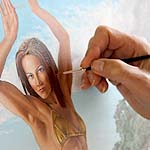
Many landscape painters work to a tried and true formula in which we are particularly liable as viewers to accept a cliche of design. Most landscapes conform to a perfectly natural division of land or sea and sky. They will omit anything that does not fit with convention in order to satisfy our deep rooted idea of what a landscape should look like. These paintings tend to let nothing get in the way of accepted ideals and hence the countless landscapes turned out every year which have a practically identical look and feel.
Many landscapes begin with the foreground some 10 metres from the viewer, particularly with a beginner who might feel unable to deal with a complex foreground. Foreground objects tend to require greater effort and might thus be avoided for the sake of an uninterrupted view and an avoidance of detail. Also large foreground shapes are likely to divide the picture, they may be perceived as ugly or in the way. It is important then when you are composing your landscape to decide if you are going to take into account the parked car, the rubbish bin or the overgrown bush that just seems too frightful a subject to tackle close up. If not then what will you put in it's place.
Instead try to make use of your field of view, make your scene selection by moving your view point about. You may be surprised what two steps back or to the side will reveal.
Don't be put off because landscape convention requires one third sky and two thirds land or vice-versa, or that you need a lead in. I myself have been and continue to be susceptible to these formula, it can be hard to practice what you preach, especially when you want a nice acceptable painting that is going to sell. Often one will arrive at a spot which offers possibilities for a painting. It is just a question of how to present it in an interesting manner. Try a higher or lower view point. Walk around a bit. Quite often a metre or two either way will make a difference. If you have the time to spend and are sure of your scene see how the shadows change with the passing of the day. Often one particular time of day will offer a mix of light and shade that really catches the eye. A line of trees may cast long shadows across a path in the afternoon that were absent in the morning. Here your lead in is no longer a stark bright streak but an interesting mix of light and shade. Again a cliche of design. Perhaps look for a vertical element to further breakup the obvious lead in. A fence post, road sign or bushes. In time you will get to know what is going to work and how a different time of day will effect the scene.
Sometimes it is not actively looking for the composition that is required, but waiting for the compostion to come to you. An empty canal or section of foreshore may not appear to offer much, that is until storm clouds begin to gather, or a barge pulls up alongside the bank. Sometimes these compositions are fleeting and can last mere moments. Even if you are not out and about looking for a possible painting, one may suddenly present itself. So it is wise to invest in, and always carry a small digital camera.
You should if possible also make sketches of your scene. Paintings done solely from camera images often give themselves away as the artist does not take into consideration the obvious cropping and standard format of a photo and the way a 50mm lens will depict the world. Also because all they have to remember the scene is the photo and nothing else.
Many formula landscapes also suffer by being nothing more than pretty pictures. They portray the world in an ideal way and have little to say other than to look nice. Perhaps the canal with the barge also has a discarded bike or shopping trolly in the water, perhaps there is an oil slick. It is tempting to leave these unpleasentries out of the composition. Perhaps think again. Do you want your painting to be another pretty picture or do you want to say something more.
★★★★☆
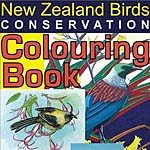
This colouring book was a gift for a friend who was travelling to New Zealand. Something to while away the hours on the long flight. It was well received. Bluedaisy - Amazon Review
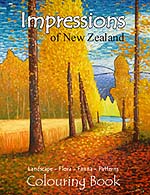
IMPRESSIONS OF NEW ZEALAND COLOURING IN PICTURE BOOK
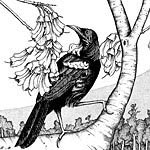
This delightful colouring book features a selection of the landscapes, patterns, flora and fauna of New Zealand. Containing 30 original hand drawn artist images on individual pages that may be removed for framing if desired. Challenge yourself to create an intensely colourful work of art from modern abstract design to realistic reflections and impressions of nature. Suitable for young adult to adult colourists.
Product details: 64 pages
ISBN 978-1523602407
8.5 x 11 inches





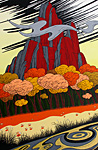
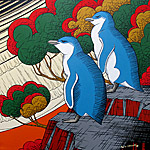



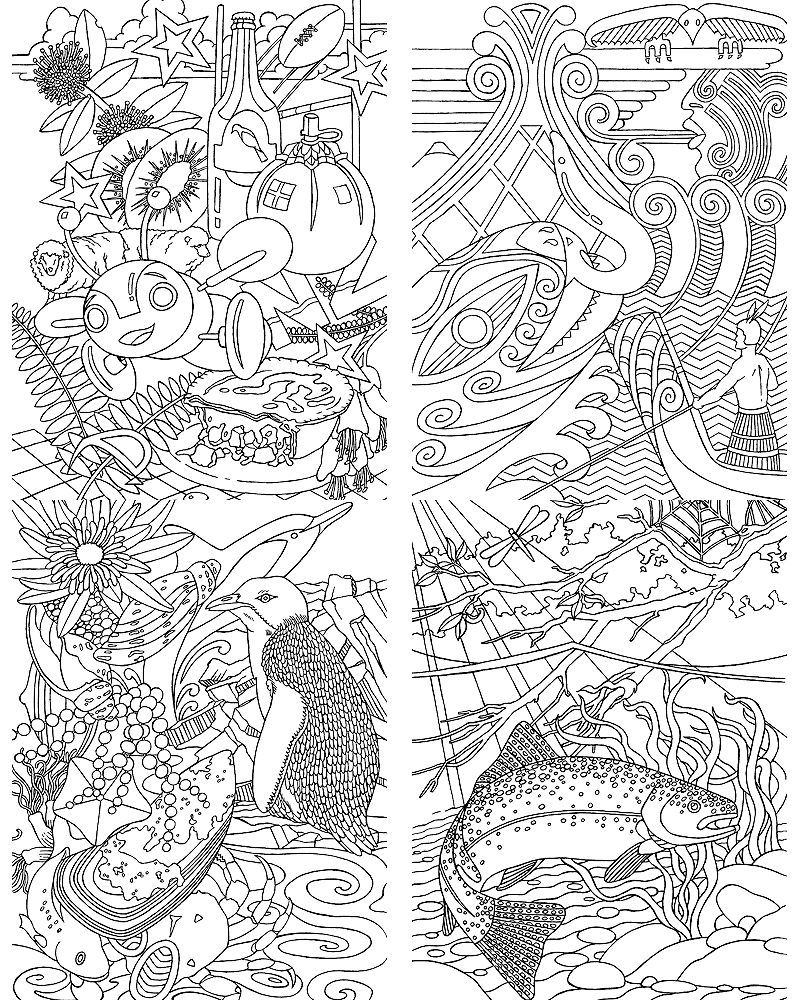

 IMPRESSIONS OF NEW ZEALAND COLOURING IN PICTURE BOOK