The organization of the component parts of a painting or drawing, and the relationship of those parts must be sufficiently interesting to attract attention. Otherwise people will quickly pass on from your painting to the next. Fundamental design theory tells us that to divide our image area into two equal parts is bad design. It's a generalisation but one worth remembering. As an exercise take a canvas and paint half of it a rich colour while leaving the other half white. On standing back it will be seen that the coloured area appears to carry more weight and will give the optical illusion of being larger. As painters we are thinking all the time in terms of optical illusion so in choosing our design we must understand how the eye and brain will interperate our use of colour and space. That doesn't mean never to divide the canvas into two equal halves, just to understand how your audience will be guided.
When thinking of pictorial design, we are concerned with the colour, tone, line and texture of our composition. What is our focal point and how do we solve the problem of introducing several focal points. An uninspired design will keep to the same basic design rules, while having a generally pleasant feel it will quickly loose it's appeal to the viewer. Those paintings which carry a more individual approach will offer the viewer something more and cause them to linger longer.
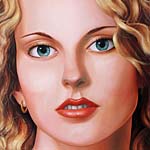
Your design must be adept at conveying mood, movement and narrative. While it is confined by the boundries of the canvas or paper it must give a sense of what is beyond so that we are not merely looking into a box. Landscapes must convey time and place, portraits must show personality. Look at Cezanne's Old Woman with a Rosary. It is hard NOT to sense her life outside of this picture.
The final result of a painting must be more than the mere recording of facts. Providing the design is sound some of the other aspects, such as accuracy of drawing can be forgiven. Though this does not mean to disregard good draughtsmanship.
Having decided on your subject and what to paint you must then set about designing it. Choosing the shape of canvas and the divisions within it, the relationships of those divisions, the direction of light, the colours of your palette. Will it be a limited colour palette? Where will your focal point(s) sit and how will you lead the eye to and from it. Make a preliminary sketch or small preliminary painting to test your ideas and see how the reality fits with what is in your head.
When looking at an artwork ask yourself two questions. Firstly, what can I learn from this. If there is something about the painting that attracts you, study it to answer the question of how the artist has achieved his/her result. What aspects of colour, design, technique etc have they employed. Understanding what makes a good painting, and why it is good, can only aid you in achieving better results. Secondly ask yourself, what could I teach this artist. If there is something about a painting you feel is not right ask yourself how you would have approached it. There is nothing wrong with criticism if it is constructive. Recognising faults will aid you in avoiding similar errors. It will also give you a sense of how far along the road you have travelled.
★★★★☆
This colouring book was a gift for a friend who was travelling to New Zealand. Something to while away the hours on the long flight. It was well received. Bluedaisy - Amazon Review
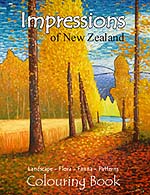
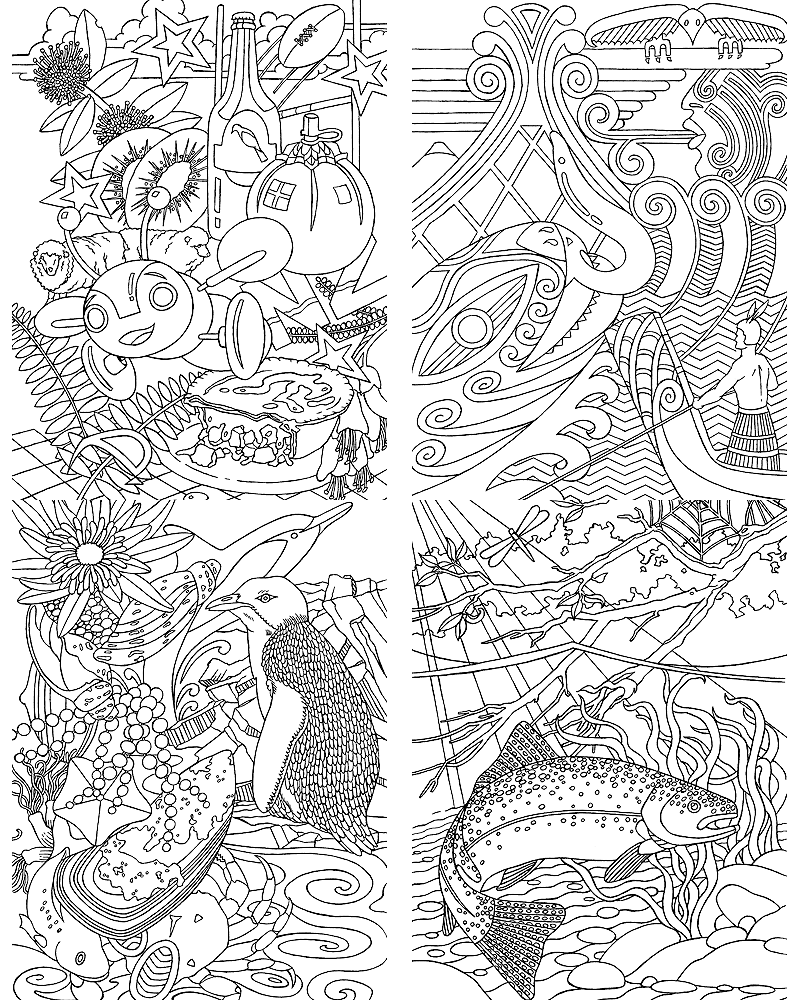
IMPRESSIONS OF NEW ZEALAND COLOURING IN PICTURE BOOK
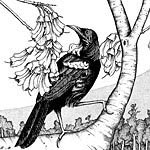
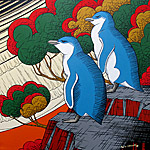
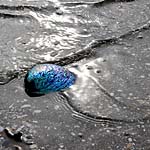
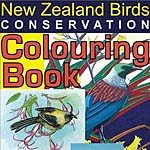
This delightful colouring book features a selection of the landscapes, patterns, flora and fauna of New Zealand. Containing 30 original hand drawn artist images on individual pages that may be removed for framing if desired. Challenge yourself to create an intensely colourful work of art from modern abstract design to realistic reflections and impressions of nature. Suitable for young adult to adult colourists.
Product details: 64 pages
ISBN 978-1523602407
8.5 x 11 inches






 IMPRESSIONS OF NEW ZEALAND COLOURING IN PICTURE BOOK