In traditional landscape painting we are confronted with the problem of having a two dimensional surface on which we wish to depict a three dimensional scene. The tool we use to achieve this is called perspective.
There are two types of perspective in painting: Geometrical and Aerial.
Aerial perspective can be loosely defined as the visual effect of atmosphere on forms over distance. The greater the distance the more atmosphere we must look through to see them. While it may seem to us that atmosphere is invisible,
it is infact full of minute particulate matter from dust, ash, exhaust and water particles. Light is continually being reflected and refracted from every particle so that over great distances atmosphere begins to mask our view of forms.
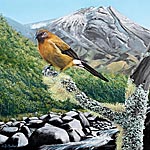
This is demonstrated when we look at a distant set of hills, you will notice their colour appears as a blue grey with little or no detail as the light traveling from them to our eye must pass through miles of disruptive atmosphere.
Therefore if we take any object and move it further into the distance we see its colours becoming increasingly less vibrant, its outlines less sharp, its tonal contrasts less seperated with itself and with those forms around it. Using this knowledge then we can create a representative three dimensional landscape by graduating how forms appear over distance.
Tip: after finishing your underpainting begin applying colour at the horizon, working in the sky and distant landforms, progressively work toward the foreground increasing tonal values, hues and intensities as you go.
Tip: if your landscape does not have a large depth of field, e.g a flower garden scene, it is still important to employ some measure of aerial perspective by exaggeration to give depth.
★★★★☆
This colouring book was a gift for a friend who was travelling to New Zealand. Something to while away the hours on the long flight. It was well received. Bluedaisy - Amazon Review
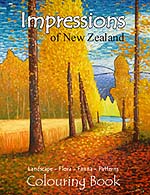
IMPRESSIONS OF NEW ZEALAND COLOURING IN PICTURE BOOK
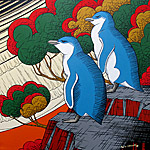
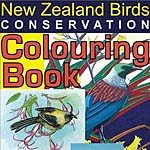
This delightful colouring book features a selection of the landscapes, patterns, flora and fauna of New Zealand. Containing 30 original hand drawn artist images on individual pages that may be removed for framing if desired. Challenge yourself to create an intensely colourful work of art from modern abstract design to realistic reflections and impressions of nature. Suitable for young adult to adult colourists.
Product details: 64 pages
ISBN 978-1523602407
8.5 x 11 inches



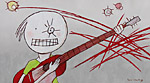


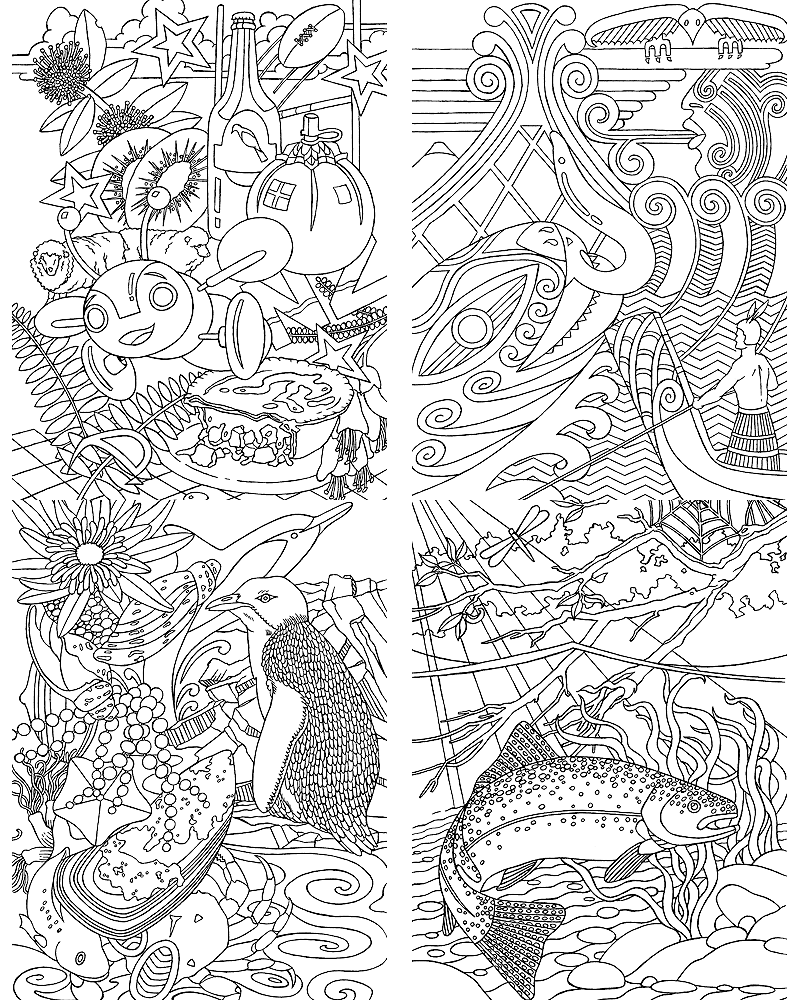

 IMPRESSIONS OF NEW ZEALAND COLOURING IN PICTURE BOOK