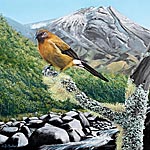
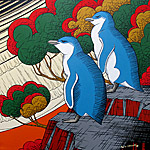
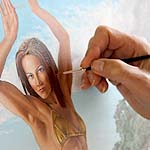
Indicating correct perspective is one of the corner stones in any study of traditional painting. While this is comparatively easy with objects that have a defined geometric shape such as buildings it becomes very much more difficult with natural forms such as trees and hills. Natural forms do not as a rule have obvious geometric direction. Tree branches for instance often intertwine, some are set above your eye level, others below. Hills will wander into the distance changing direction, size and shape, some hills will merge with others like folds in fabric.
There is plenty of information available on the principles of perspective which is far too extensive a subject to detail here. If you are beginning landscape study I would suggest starting out incorporating man-made structures as these well defined perspective lines will help define the correct base lines and eye levels of the other natural objects in the painting. Bear in mind though that these lines and the mechanisms used to define them should be unobtrusive and simple. There is a danger that your work will look more like a souless architectural drawing if you develop your lines without freedom of expression. Roads, fences, walls and similar structures can all help define a strong perspective line without dominating or being the focal point of the painting. Similarly tree lines, streams and geographical features can offer the same to those more accomplished.
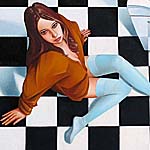
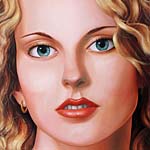
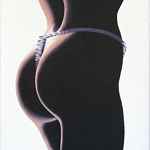
The human form is perhaps one's greatest test of maintaining correct perspective. Here we must deal with issues of foreshortening, overlapping muscles, multiple angles and the relationships of objects to the form. Each part of the body from finger to hand to forearm and so on will have it's own perspective dependant upon our viewing eye level and its relationship to the rest of the body's pose. One of the properties we strive for in the drawing of traditional human form is solidity and a sense of physical depth. In landscape we are concerened with kilometers of depth, in nudes we are concerned with centimetres of depth.
I would suggest to those starting out on life drawing to think of the human form as a series of cylinders connected in a variety of ways. This will help show how the body's limbs advance or receed and will aid in foreshortening. It will also aid in seeing the body as a volume rather than a two dimensional outline. By studying the drawings of one of the greatest painters Leonardo da Vinci. we can see how one should draw in volume rather than outline. Begin by drawing the body in simple poses where most of the form lies along a flat plain that is mostly vertical or horizontal and in which you will learn size relationships of head:body, head:foot, arm:leg etc. As you feel more confidant you can increasingly complicate the pose by extending arms towards you, crossing limbs and angling the body.
Tip: Understand that true linear perspective will always have it's limitations within painting and that which is truely linear may not be pleasing to the eye.
Tip: Have the model hold a light wooden pole vertically or horizontally from which you can visually measure the body's angles and curves against.
|
|

GENERAL ART TECHNIQUES
- Applying a Base Coat
- Choosing a Subject
- Colour
- Colour II
- Creating an Abstract
- Dealing with Critics
- Design
- Developing A Painting
- Developing A Style
- Fat Over Lean
- Hue, Tone & Intensity
- Ten Rules for Classical Painting

PAINTING LANDSCAPES
- Aerial Perspective
- Composition
- Drawing Trees
- Using Tone

PAINTING MATERIALS
- Basic Colour Palette
- Basic Colours Continued
- Bristle Brushes
- MDF board
- Oil Paints
- The Camera
- Varnishing Artwork

PAINTING NUDES
- Complexity of Form
- Portrait Drawing
- Public Reaction
- Skin Tone
|







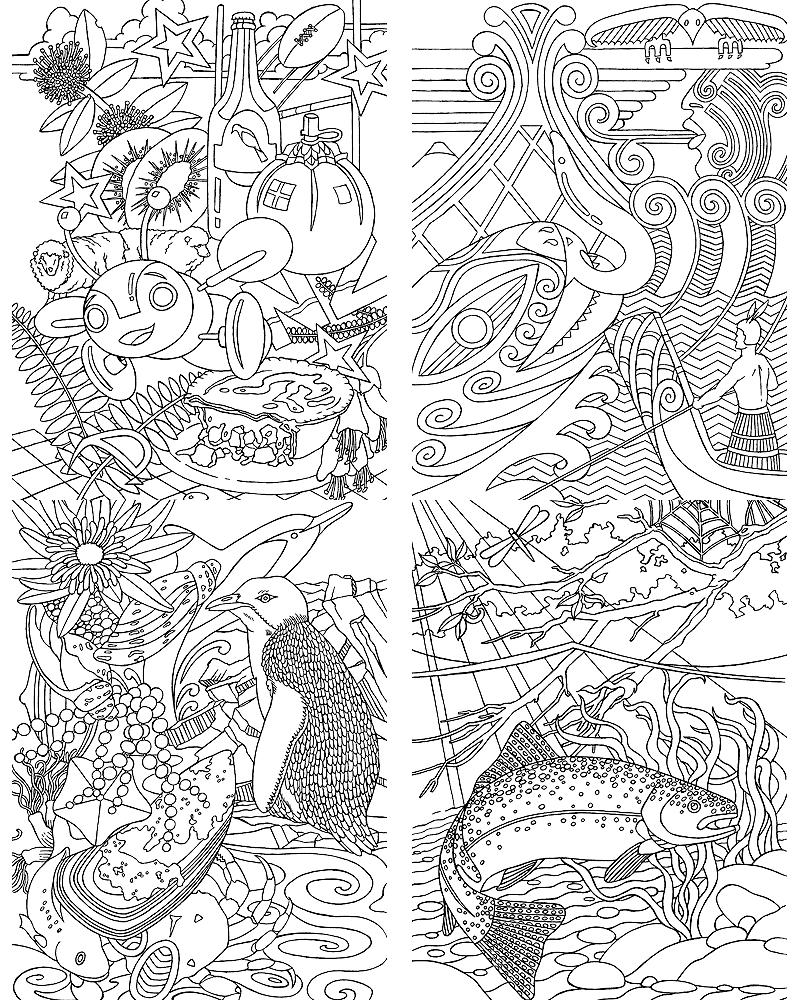

 IMPRESSIONS OF NEW ZEALAND COLOURING IN PICTURE BOOK